Create or View Test Cycles
The Test Cycle module allows the testers to perform Test Execution in a tracked and organized manner. QMetry provides users with a quick and efficient process of creating a Test Cycle. Additionally, you can carry out all the functionalities related to the Test Cycle from the 'Create Test Cycle' detail page.
Note
Permission required: You must have the Test Cycle Create permission for the project to create a test cycle in the QMetry Test Management for Jira.
Steps to Create a Test Cycle
Perform the following steps to create a new test cycle and directly associate it with a folder:
Select a folder in the folder tree.
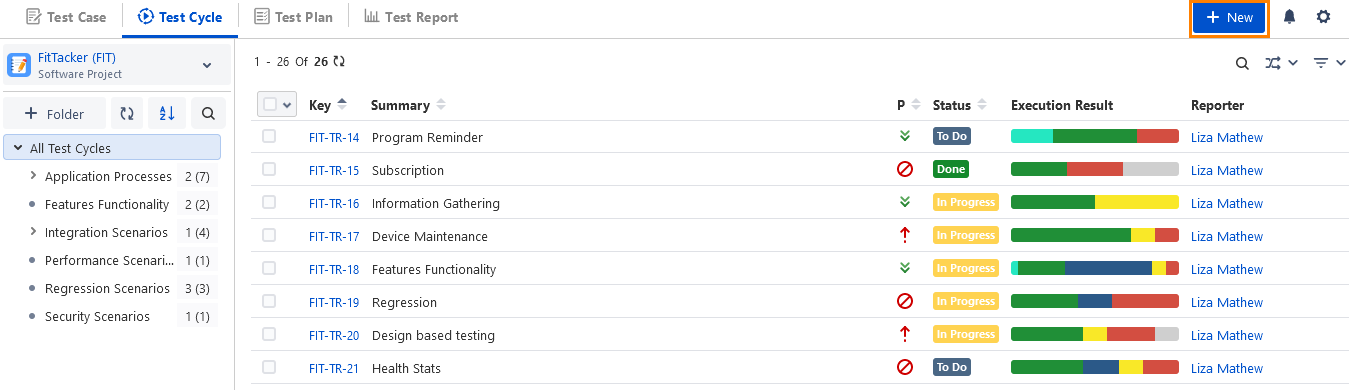
Click the New button at the right. The new test cycle will be created in the folder you selected in the tree.
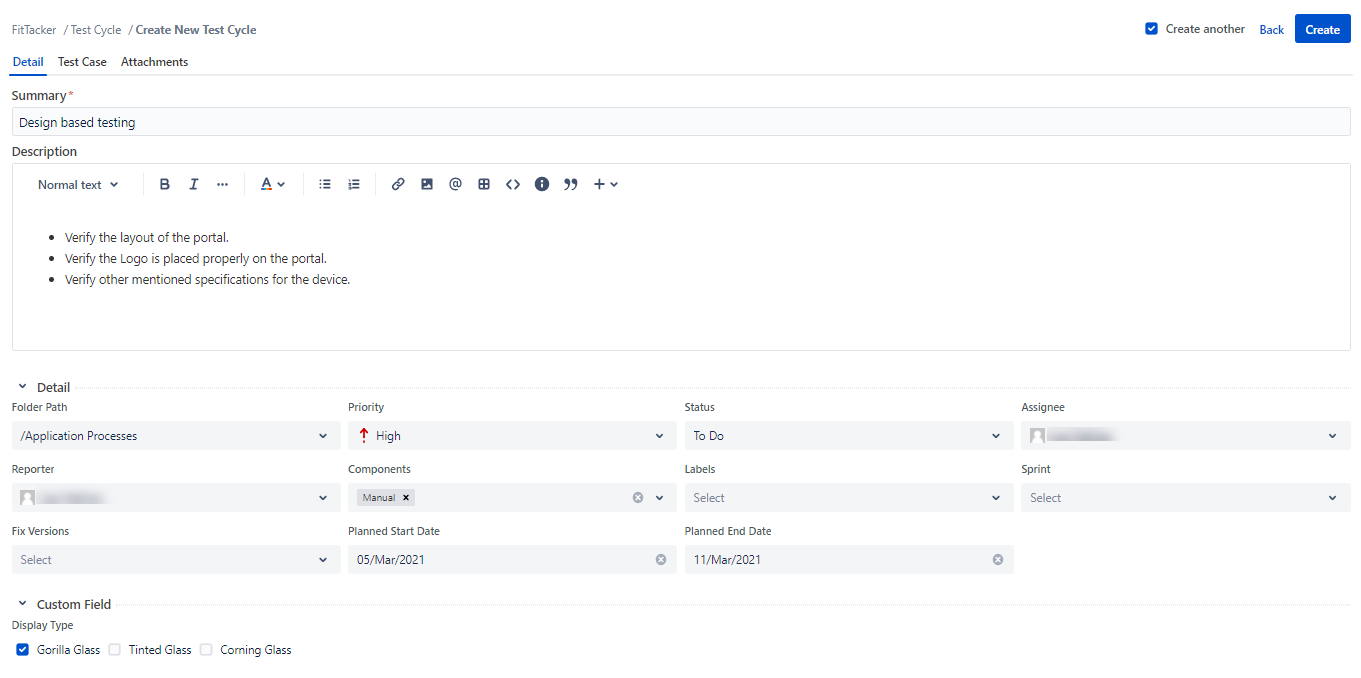
On the Create Test Cycle screen, you can see the tabs of Detail, Test Case, and Attachments. Once you create the test cycle, the Comments and Audit Logs tabs will be visible.

Enter Test Cycle Details.
Summary: It is a short summary of the test cycle.
Description: It describes the test case with more details like images, links, etc. The field has Wiki markup editor. You can use different options that are available to apply on the text. Refer to Text Formatting.
The following permissions and configurations are required to tag users and receive an email when tagged.
System Fields: These are system defined fields. Enter/select values for the fields. The list values are entered in Configuration > Project Configuration.
Folder Path: It shows the folder path of the test cycle where it is located.
Priority: It shows how important the test cycle is with priority assigned as - blocker, critical, high, low, etc. You can configure the priority list values from Configuration > Priority.
Status: It shows the current state of the test plan in the workflow with Statuses like To Do, In Progress, Done, etc. You can configure the status list values from Configuration > Statuses. On the test cycle list view, you can update the test cycle status inline by clicking in the cell under the Status column. You cannot inline update status of the cross project test cycles linked to a test plan or story.
Assignee: It shows the user who is assigned to work on the test cycle. The user's list display users who have access to the project.
Reporter: It shows the user who has created the test cycle. The user's list displays users who have access to the project.
Components: It references Project Components that you have created in Configuration > Components like UI, Configuration, etc.
Labels: It is helpful to group test cycles into categories. You can configure the Labels list values from Configuration >Labels.
Sprint: The field is useful for Agile methodology where planned tasks have to be completed by the team and made ready for review. It shows the Sprint in which the test cycle is included.
Fix Versions: It shows the version of the software in which the issue is fixed. The field values come from Jira.
Planned Start Date, Planned End Date: You can mention the approximate time of the Cycle - on which date it will start and end.
Custom Fields: You can add additional fields other than system fields. Custom Fields are added from Configuration > Custom Fields.
Once you are done entering details, click Create to create the test cycle.
Create another
The Create another check box allows users to keep creating one test cycle after another without having to click the Create button repeatedly. It is helpful when you have to create a series of test cycles.
While creating another entity, the values of some fields populate as these field values get preserved.
Field values that will be preserved | Field values that will not be preserved |
|---|---|
|
|
Link Test Cases
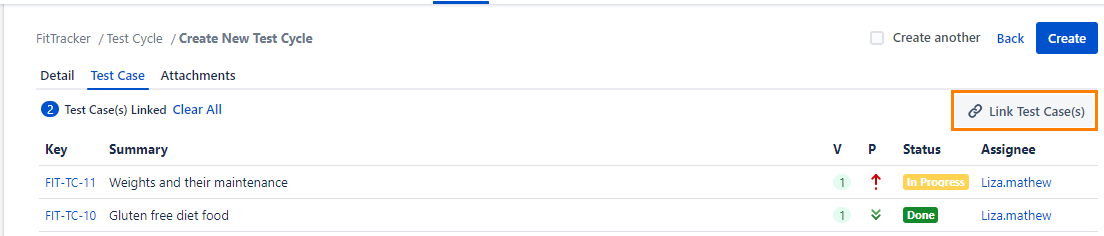
You can link multiple existing test cases to the test cycles. Read more details on Link Test Cases to a Test Cycle.
Test Cycle List View
You can show or hide all field columns in the Test Cycle module grid, except Sequence No, Key, and Summary. Columns selected in the list will appear on the Test Cycle screen, while unselected columns will remain hidden. You may choose to keep Priority and Status hidden in the Test Cycle list view. To restore the default Test Cycle list view, open the Columns drop-down and select Reset to Default.
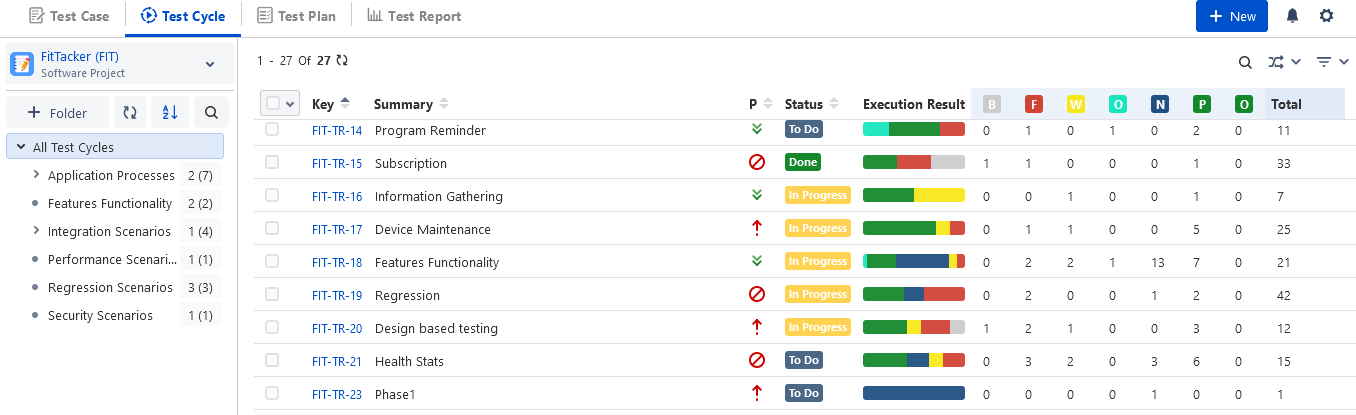
You can view the Execution Summary of test cycles from the test cycle list view. The Execution Summary (Tabular) column is added to the Test Cycle list view to show the exact count of test case execution status. Enable the column Execution Summary (Tabular) from the Column drop-down.
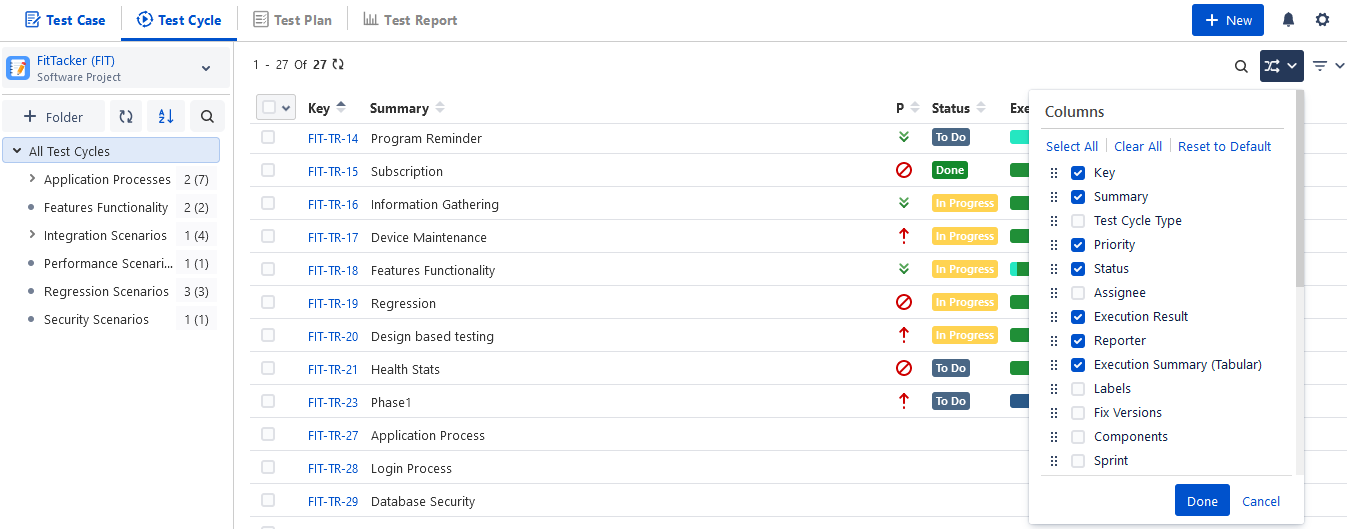
The execution result columns are added with the count of test case execution status.